

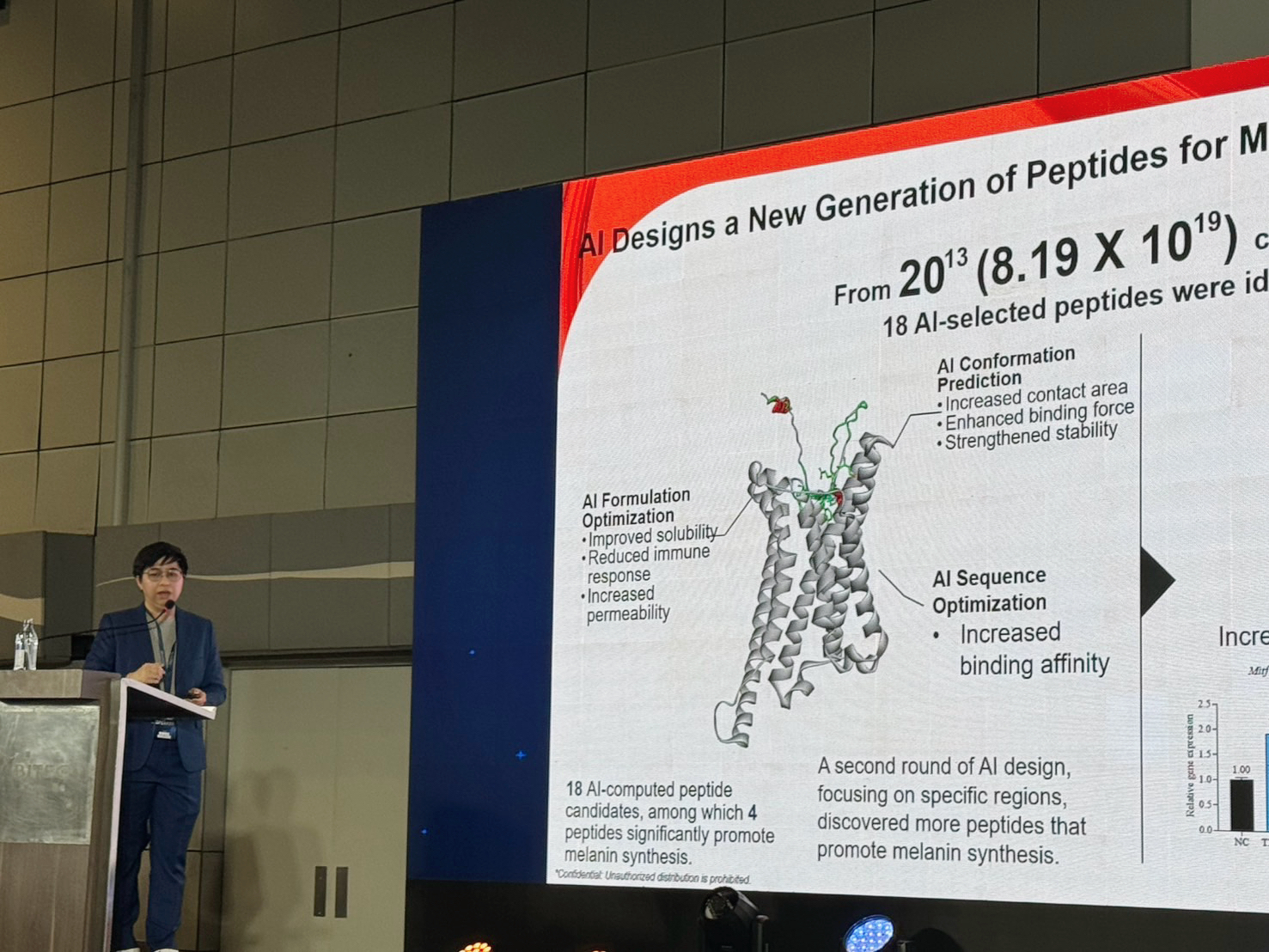
訊聯細胞智藥研發部經理連文瑜博士分享,透過 AI 驅動的胜肽建模,從極大序列組合中篩選出候選成份,後續可進行不同應用
全球長壽經濟(Longevity Economy)快速崛起,再生醫學與美容科技融合趨勢加速成形。訊聯細胞智藥(7808)近日受邀於「2026亞洲長壽經濟高峰會(Asia Longevity Economy Summit, ALES)」,發表外泌體、AI設計胜肽與精準色素調控等最新研發成果與全球化佈局。訊聯智藥除積極拓展日本、韓國、拉美市場,近期並透過GCC Asia體系,將台灣AI再生醫學技術導入海外醫美與健康產業應用,鎖定高成長的銀髮美學與精準保養商機。
訊聯細胞智藥總經理李黛苹指出,泰國醫美市場正從傳統抗老需求,轉向強調「Beauty Longevity」肌膚永續美學的健康管理概念,對再生醫學如外泌體與AI技術的結合接受度高,人們追求的不再只是『補救』衰老,而是透過科學機制與再生醫學技術,延長肌膚維持穩定與健康狀態的時間。
泰國醫美診所已突破6600家,成為亞洲第二大聚集地。泰國醫美市場對美白、膚色均勻與保濕等需求強勁,預估至2030年市場規模將達34.5億美元,年複合成長率約14%,成為亞洲重要醫美成長市場之一。
此次高峰會中,訊聯細胞智藥研發部經理連文瑜博士發表「外泌體 × AI胜肽」雙引擎平台技術。該平台整合外泌體技術、植物來源活性成分與AI設計功能性胜肽,建立新一代精準色素調控策略,未來可望應用於膚色均勻化、色素修復、白斑調控與發炎後色素沉澱(PIH)等領域。
訊聯細胞智藥指出,隨著AI與再生醫學技術整合深化,「Science-backed Beauty」將成為下一波高端美容與精準健康的重要發展方向。
在產業合作方面,本次ALES峰會協辦單位之一的泰國國際美妝組織(TCOS),與台灣麗谷產業聯盟同為全球美妝聯盟GCC Asia成員,長期串聯東南亞化妝品、生技、醫學美容與健康產業供應鏈,推動亞洲 Beauty Tech 與長壽經濟跨國合作。
台灣麗谷產業聯盟理事長李琳媛表示,台灣與泰國同屬高溫潮濕氣候市場,雙方將共同推動符合亞洲膚質與環境需求的「T-Beauty」概念,從原料、研發到標準制定深化合作,協助台灣原料與再生醫學技術拓展東南亞市場。
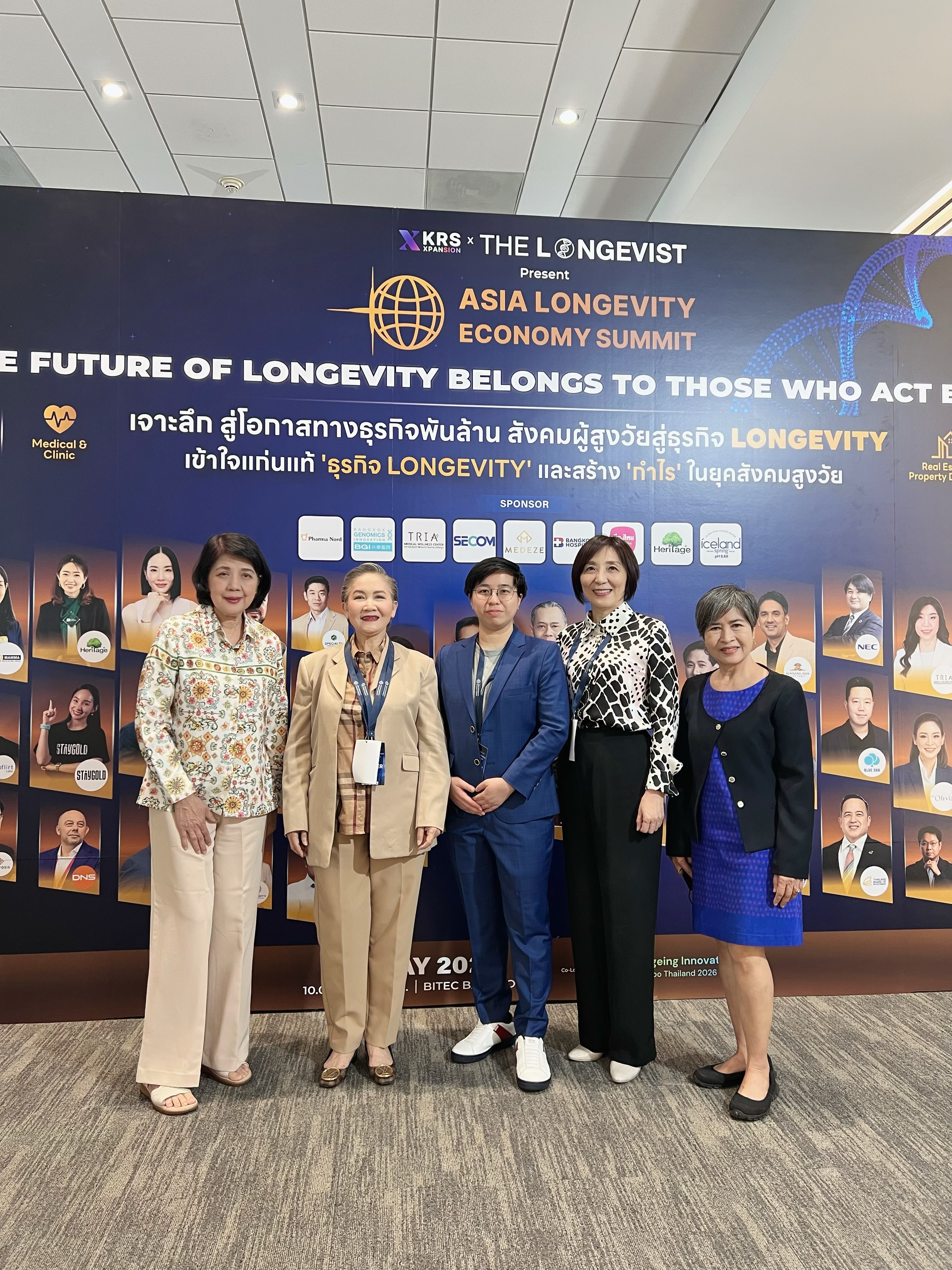
台灣麗谷產業創新聯盟理事長李琳媛(右二)與泰國國際美妝組織TCOS總經理 Dr. Lucksupha(左二)及訊聯細胞智藥研發部經理連文瑜博士(中)
法規布局方面,訊聯是台灣率先取得衛福部「人源」與「動物源」外泌體雙重核准的上市櫃公司。其中,人源外泌體已向美國FDA提交Type II Drug Master File(DMF),相關製程與品質資料已完成註冊建檔。此外,多項外泌體原料也取得美國 PCPC INCI,正式納入國際化妝品原料命名體系,可進一步拓展全球化妝品與個人護理市場應用。
在海外商業化布局方面,訊聯細胞智藥已於多個海外市場完成產品取證,包括馬來西亞、哥倫比亞,隨著AI、再生醫學與長壽科技持續融合,將持續深化精準健康與Science-backed Beauty平台布局,推動台灣外泌體於全球Beauty Longevity 市場中的影響力。
BIONET Therapeutics Targets High-Growth "Beauty Longevity" Market in Thailand with AI-Driven Exosome Platform
As the global "Longevity Economy" continues its rapid ascent, the convergence of regenerative medicine and aesthetic technology is accelerating. BIONET Therapeutics (7808.TW) recently showcased its latest breakthroughs in exosomes, AI-designed peptides, and precision pigment regulation at the 2026 Asia Longevity Economy Summit (ALES). Building on its expansion into Japan, South Korea, and Latin America, BIONET is now leveraging the GCC Asia network to introduce Taiwan’s AI-driven regenerative medicine to Thailand’s booming medical aesthetics and wellness sectors, targeting the high-growth "Beauty Longevity" and precision skincare markets.
According to BIONET Therapeutics General Manager, Dr. Grace Lee, the Thai aesthetic market is shifting from traditional anti-aging treatments toward "Beauty Longevity"—a holistic concept of skin sustainability and health management. "Consumers are no longer just looking for 'remedies' for aging; they are seeking scientific mechanisms and regenerative technologies to extend the period during which their skin remains stable and healthy," Lee stated.
Thailand has become Asia’s second-largest hub for medical aesthetics, with over 6,600 clinics nationwide. Driven by strong demand for whitening, evening skin tone, and hydration, the Thai market is projected to reach US$3.45 billion by 2030, with a compound annual growth rate (CAGR) of approximately 14%.
At the summit, Dr. Lenny Lien, R&D Manager at BIONET Therapeutics, unveiled the company’s "Exosome × AI Peptide" dual-engine platform. This technology integrates exosome science, plant-based active ingredients, and functional peptides designed by AI to establish a new generation of precision pigment regulation. The platform is poised for applications in skin tone evening, pigment repair, vitiligo management, and post-inflammatory hyperpigmentation (PIH).
BIONET emphasized that as the integration of AI and regenerative medicine deepens, "Science-backed Beauty" will define the next wave of high-end aesthetics and precision health.
The expansion is bolstered by industry collaborations. The Thailand Cosmetic Cluster (TCOS), a co-organizer of ALES, and the Taiwan Beauty Valley are both members of the Global Cosmetics Cluster-Asia (GCC Asia). This network connects supply chains across Southeast Asia to promote cross-border cooperation in Beauty Tech and the longevity economy.
"Both Taiwan and Thailand operate in hot and humid climates," said Lin-Yuan Lee, Chairperson of the Taiwan Beauty Valley. "We are working together to promote the 'T-Beauty' concept, tailored for Asian skin types and environmental needs, deepening our cooperation from raw materials and R&D to standard setting".
Internationally, the Taiwanese firm is expanding its footprint after becoming the island’s first listed biotech company to win domestic regulatory approval for both human and animal exosome products.The company has also filed a Type II Drug Master File (DMF) with the US Food and Drug Administration (FDA) covering its manufacturing processes. Several of its exosome-related ingredients have also been incorporated into the Personal Care Products Council (PCPC) International Nomenclature Cosmetic Ingredient (INCI) system.
With product approvals already secured in Malaysia and Colombia, the company aims to leverage the growing convergence of AI and regenerative medicine to capture a share of the expanding global market for high-tech skincare and healthy aging.